
Our Work
Reforms that count are typically a substantive and iterative journey. Our work aims to support key junctures of the reform process; as a partner along this journey.


Climate Integration Strategy for the Australia–PNG Subnational Program
Client: Abt Associates / DFAT
Capability: Climate Change Integration, Development Program Strategy, Climate Finance, Monitoring & Evaluation
Region: Pacific – Papua New Guinea
The Australia–PNG Subnational Program (APSP) works across three regional partnerships – the Bougainville Partnership, the Western Province Partnership, and the Kokoda Initiative. Outside Partners was engaged to develop APSP’s inaugural Climate Integration Strategy, “Towards Risk-Informed Development” (2024–2026).
This first strategy established the program’s foundational approach to climate integration, building internal capacity and developing tools to risk-inform existing workstreams. Key outputs included a project-level climate risk assessment methodology, a climate finance accounting framework, and guidance for incorporating adaptation indicators into program results frameworks.
Outside Partners was re-engaged to develop the second-phase strategy (2026–2030). Building on the first, this strategy shifts emphasis from internal capacity building toward supporting provincial and local governments, community governance structures, and local service providers to identify and implement climate-resilient development actions through place-based programming. It draws on climate risk assessments conducted collaboratively for each of the three program areas.
Formulation of Tuvalu’s National Development Coordination Policy
Client: Government of Tuvalu / UNDP (Gov4Res)
Capability: Development Policy, Governance, Monitoring & Evaluation
Region: Pacific – Tuvalu

Development cooperation and climate finance together account for around two-thirds of Tuvalu’s public expenditure, making the quality of their coordination a practical development question with real consequences. Outside Partners was engaged to support the Government of Tuvalu in formulating its National Development Coordination Policy (2017–2020).
Our role was to design and facilitate a structured, participatory policy process. This involved preparing analytical inputs to inform key decision points and working through an inter-agency Technical Working Group (TWG) drawn from the Ministries of Finance and Economic Development, Foreign Affairs, Home Affairs and Climate Change, and the Prime Minister’s Office. The process identified a range of coordination challenges – including fragmented sector programming, uneven use of government public financial management systems, and high reliance on project modalities – and developed targeted policy directions in response. Among these, the policy gave particular attention to climate-related coordination gaps: the lack of a consistent approach to climate risk across the development cooperation portfolio, and the barriers constraining Tuvalu’s access to and management of climate finance.
Outside Partners was subsequently re-engaged to lead the 2026 update of the policy. This second phase builds on the original while giving greater attention to climate dimensions, including how to strengthen integration of climate risk into government planning and budgeting systems, improve coordination of climate finance across government, and shift the balance of climate finance access from vertical funds toward bilateral channels. Draft strategic directions are now being finalised with development partners.

Design of DisasterREADY Phase 2
Client: Palladium / DFAT
Capability: Disaster Risk Reduction, Climate Resilience, Program Design, Monitoring & Evaluation
Region: Pacific
Outside Partners was engaged during the redesign of DisasterREADY Phase 2 (DR 2.0), Australia’s humanitarian preparedness and community resilience program in the Pacific. Our role was to develop the conceptual framework for community-level resilience that informed design activities across the program.
The framework centred on two overlapping dimensions of resilience capacity – absorptive capacity (the ability to respond to and recover from disaster events) and adaptive capacity (the ability to adjust and reduce disaster risk over the longer term) – and emphasised the importance of understanding the specific barriers constraining these capacities for different community groups. This framing helped orient the program’s design logic toward addressing underlying causes rather than surface-level outputs.
In addition to the conceptual framework, our work included design clinics with individual program components, review and appraisal of component problem analyses and project designs, and inputs to the program’s M&E framework, including a Resilience Marker tool to support partners in incorporating resilience considerations into Activity Plans.
Outside Partners was later re-engaged at the program review stage to assess how the resilience framework and design principles were being applied in practice across partner Activity Plans, and to provide guidance to support implementation.
Water for Women Fund – Climate Resilience Transition
Client: GHD / DFAT
Capability: Climate Change Integration, WASH, Program Design, Knowledge and Learning
Region: Asia-Pacific (South Asia, Southeast Asia, Pacific)

The Water for Women Fund was a DFAT-funded GEDSI and WASH program operating across 16 countries over eight years. In its final two years, the program shifted strategic direction to focus on climate change adaptation – supporting civil society organisation projects to transition toward climate-resilient WASH development.
Outside Partners was engaged as Climate Adviser to facilitate this transition. The work involved supporting the program and its CSO partners to integrate climate risk and resilience into their programming approaches, and drawing out and documenting the lessons emerging from this process for the broader WASH sector.
Two outputs capture the substance of this work. The first is a learning brief, Strengthening Governance for Climate-Resilient WASH Systems, which synthesises eight promising practices from Water for Women partner experiences for integrating climate risk and resilience into WASH governance systems. The second is a reflection piece on climate financing implications for future climate-resilient WASH programming, drawing on what the Fund experience revealed about the gap between how climate finance is structured and what effective WASH adaptation actually requires.
A central finding from this second piece is that framing climate-resilient WASH programming too narrowly around climate-specific activities risks missing the most critical needs. In practice, the most important adaptation work often involves activities that address barriers affecting both adaptive capacity and broader WASH development – including governance reforms to strengthen WASH planning and decision-making systems. Narrowing eligible activities to those where climate risk is the principal rationale tends not to align with priority needs, does not integrate coherently with other interventions, and is unlikely to support an efficient transition to climate-resilient WASH development. The implication for programming and financing design is that climate finance needs to be pooled with other development assistance and directed at this broader, integrated conception of what climate-resilient WASH development requires.

Food Systems Policy Analysis – Solomon Islands
Client: Pacific Community (SPC) / FAO
Capability: Food Systems Policy, Policy Diagnostics, Governance Reform
Region: Pacific – Solomon Islands
Solomon Islands faces significant food and nutrition challenges – including high rates of diet-related non-communicable disease alongside persistent undernutrition – that are rooted in the structure of the food system and the policy environment shaping it. Members of the Outside Partners team contributed to two complementary analytical exercises that examined these challenges from different angles.
The first was a policy effectiveness analysis conducted for the FAO FIRST programme (2019), which examined bottlenecks to the implementation of food and nutrition security policies in Solomon Islands. This involved assessing the political economy factors, institutional arrangements, and capacity constraints affecting policy implementation, and identifying a framework of feasible actions – mindful of equity considerations – that could be scaled up. The analysis was led through a consultative process with the Solomon Islands Ministry of Agriculture and Livestock, grounding findings in government ownership and practical realism.
The second was a food systems policy brief prepared for the Pacific Community and FAO (2022), which synthesised a broader analysis of policies across the food system to identify priorities for reform toward healthier and more sustainable outcomes. This work applied a whole-of-system lens to the policy landscape – mapping coherence and gaps across sectors, and identifying where targeted policy action could generate co-benefits across nutrition, environmental, and economic objectives.
Together these two pieces illustrate an approach to food systems policy that begins with the evidence – understanding what policies exist, how they work in practice, and where the system-level leverage points lie – before moving to recommendations for reform.
Evaluation of Brunei Darussalam’s Multisectoral NCD Action Plan
Client: World Health Organization / Deakin University
Capability: Evaluation, Health Policy, Governance Reform
Region: Asia – Brunei Darussalam
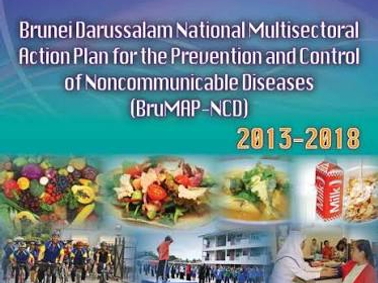
Non-communicable diseases (NCDs) account for the large majority of deaths in Brunei Darussalam, driven by risk factors including unhealthy diets, physical inactivity, and tobacco use. Brunei’s 2013–2018 Multisectoral Action Plan for the Prevention and Control of NCDs (BruMAP-NCD) was an ambitious response – engaging multiple ministries and sectors under a shared prevention and control agenda.
Members of the Outside Partners team led a joint evaluation of this plan, commissioned by Deakin University and the WHO Representative Office for Malaysia, Singapore and Brunei Darussalam (2019–2021). The evaluation assessed the extent to which actions had been implemented, examined whether the plan’s objectives had been achieved, and analysed its relevance and impact on population health outcomes. It also examined the institutional and governance dimensions of the plan – how well the multisectoral coordination mechanisms had functioned in practice, and what this meant for the design of the successor plan.
The evaluation combined analysis of policy and program documentation with stakeholder consultations across government ministries, and applied a theory-based framework to assess contribution and identify lessons for subsequent reform. The findings and recommendations directly informed the development of Brunei’s next multisectoral NCD action plan.

Nutrition Environment Assessment Toolkit for Schools – East Asia and Pacific
Client: UNICEF East Asia and Pacific Regional Office
Capability: Food Systems Policy, Policy Diagnostics, Capacity building, Evaluation
Region: Asia-Pacific
Schools are a critical setting for shaping children’s diets and nutrition outcomes, and the quality of the school food environment – the foods available, the messages children receive, and the governance systems supporting healthy choices – varies considerably across the East Asia and Pacific region. Members of the Outside Partners team contributed as lead authors to the development of the Nutrition Environment Assessment Toolkit for Schools (NEAT-S) for UNICEF East Asia and Pacific Regional Office.
NEAT-S is a practical tool designed to give policymakers and individual schools standardised, comparable data on the state of the school nutrition environment across four domains: nutritious foods in schools, healthy school food and physical environments, nutrition-related knowledge and skills, and nutrition-related governance. The toolkit – available at unicef.org/eap/reports/nutrition-environment-assessment-toolkit-schools – supports both school-level action and national policy development, enabling governments to identify gaps, set priorities, and track progress over time.
The work drew on a whole-of-system understanding of the factors shaping food environments and combined rigorous design with practical usability across diverse country contexts in the region.
M&E Framework for the Climate and Oceans Support Program in the Pacific (COSPPac) Phase 3
Client: Bureau of Meteorology (BoM) / DFAT
Capability: Evaluation, Policy Design, Capacity Building
Region: Pacific

The Climate and Oceans Support Program in the Pacific (COSPPac) supports National Meteorological Services (NMS) across Pacific Island Countries to deliver climate and ocean information services that communities and governments can use to manage climate and disaster risks. When the program entered its third phase, Outside Partners was engaged to develop the monitoring and evaluation framework for the investment design.
The starting point was developing a sound and shared theory of change – setting out, with clarity and on a basis of evidence, how and why COSPPac's interventions are expected to lead to improved climate and ocean information services and, ultimately, to Pacific communities and governments that are better able to manage climate risks. This involved diagnostic work to understand what previous phase M&E frameworks had done well and where they had fallen short. A consistent finding was that outcome-level data – particularly on the utility of climate and ocean services to users – had not been adequately collected in earlier phases, limiting the program's ability to assess its own effectiveness or support meaningful learning for improvement.
The Phase 3 framework responds directly to these findings. Relative to earlier phases, it places greater emphasis on collecting core outcome-level information needed to answer effectiveness-related evaluation questions – including whether NMS services are genuinely useful and useable to the stakeholders they are designed to serve. A key strategy for achieving this is building M&E capacity within NMSs themselves: supporting meteorological officers to develop data collection instruments and procedures, and to implement service-specific M&E frameworks at the country level. This approach serves a dual purpose – strengthening the COSPPac-wide evidence base while also building an enduring capability within NMSs to monitor and improve their own services over time.
The framework also introduces more clearly defined standards for progress assessment, a structured schedule of periodic evaluations differentiated by scope across the implementation period, and provision for a dedicated M&E adviser within the program's management unit to support full implementation.